

There was a time when change could be easily recognized, when it had a fairly clear boundary and arrived as something that began, took shape and, at a certain point, came to an end, giving organizations a renewed sense of stability to move forward from.
Today, that stability has become more subtle and intermittent, while change has stopped presenting itself as a defined event and has started to coincide with the very context in which we work, a continuous condition shaped by instability, complexity and constant redefinition
Within this scenario, the questions that accompany us begin to shift, as attention moves from how we deal with change to the quality of presence we are able to maintain while change unfolds, while information remains partial and directions take shape as we move.
It is precisely here that agility transforms and moves away from being associated with speed or with a set of tools, taking instead the form of a kind of moving clarity, the ability to read what is emerging even when it is not yet fully visible, to choose how to stay within a situation as it evolves, to act with intention without waiting for everything to be defined.
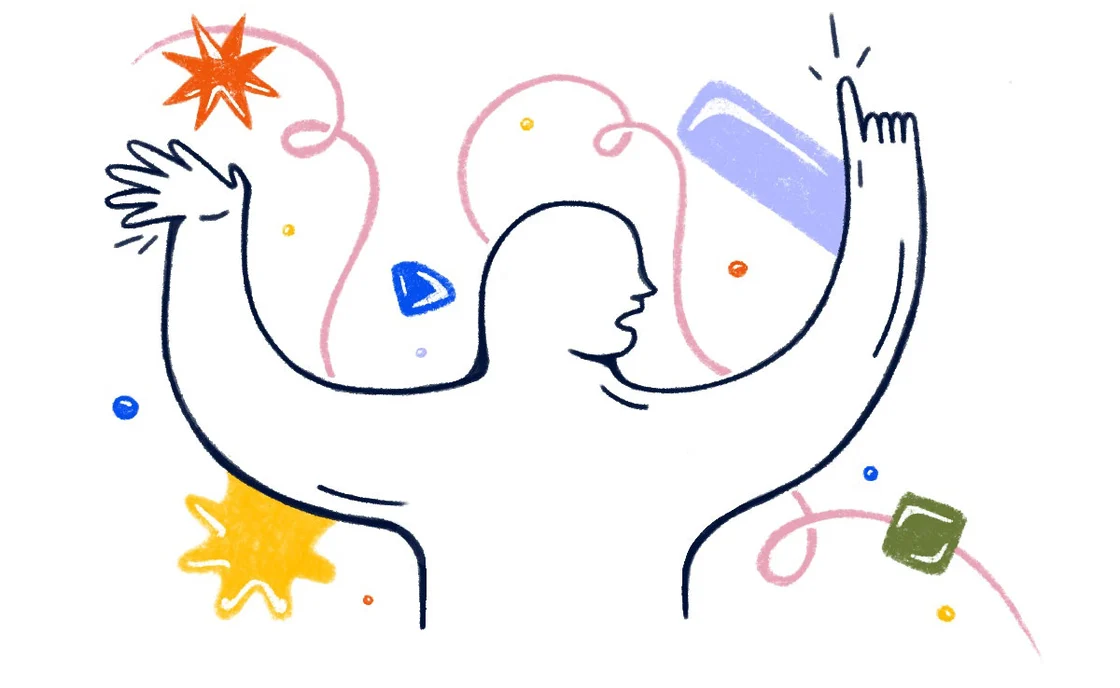
In the work we carry forward at Wyde, this quality takes form through two dimensions that continuously intertwine, as every transformation passes both through the way individuals stay within what is happening and through the way groups build meaning while they decide and move forward.
Personal Agility relates to the relationship each person has with themselves in moments when the context is shifting, when automatic patterns, rapid interpretations and reactions begin to arise even before we become aware of them, and it calls for the ability to notice these dynamics as they unfold, creating a space that allows for choice.
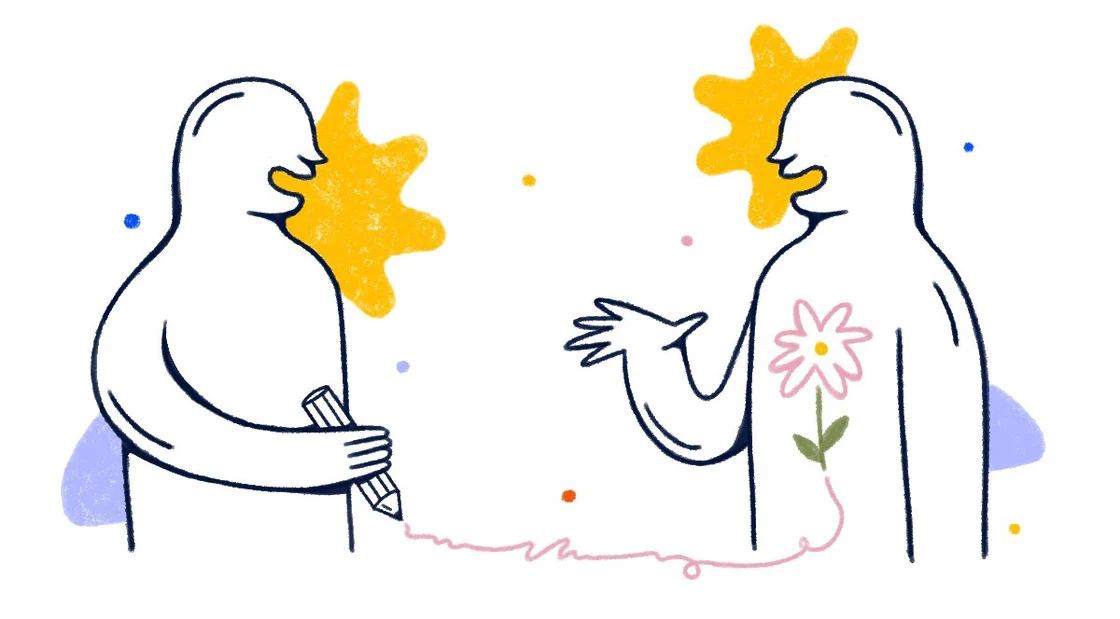
Collective Agility, on the other hand, relates to the quality of the field that teams are able to create, a space in which perspectives meet, differences find a way to integrate, and decisions take shape even when clarity remains incomplete.
These two dimensions feed each other, as a higher level of individual awareness changes the quality of presence within the group, while a collective context that can hold complexity allows people to move beyond reactive patterns and discover new possibilities for action.
It is within this interplay that agility becomes a concrete practice and, in the project we developed with Philip Morris International, this intuition translated into a journey that works simultaneously on the individual capacity to stay within situations and on the team’s ability to read and navigate complexity together.
Throughout the work, it becomes clear how the real difficulty rarely lies in a lack of technical skills, while it becomes equally evident how much more delicate it is to create that inner and shared space that allows us to see before acting, to recognize what is moving within and around us, and to build meaning together before choosing a direction.

To make this capacity trainable, we identified six principles that act as points of orientation, ways of being within situations that, over time, transform the quality of decisions and relationships.
The first concerns awareness, which takes shape in the ability to see clearly what is happening within oneself and within the system, recognizing one’s triggers, distinguishing between facts and interpretations, and noticing the moments in which one is holding onto a position, while at a collective level it becomes the group’s capacity to stay aware of its own functioning, of the climate and of the alignment that is being built or lost.
The second concerns growth, understood as the willingness to learn as reality shifts, allowing new information to reshape one’s perspective, treating error as a source of data, and creating, at team level, contexts in which experimentation becomes part of the work, turning the group into a space of continuous learning.
The third principle concerns impact, bringing attention to the effect that every behavior generates within the system, leading individuals to question what they are producing in relationships and in ways of working, while teams learn to consider the consequences of their decisions more broadly, including the quality of the field they are creating.
The fourth principle concerns ownership, which takes form in the choice to step into situations by assuming active responsibility even when the boundaries remain open, and which, at a collective level, becomes a form of distributed leadership capable of activating from multiple points rather than relying solely on hierarchy.
The fifth principle concerns adaptability, which emerges in the ability to move forward even when information remains incomplete, maintaining a direction that is clear enough to act, while teams develop iterative ways of working that allow decisions to take shape progressively, integrating learning along the way.
The sixth principle concerns productive tension, which recognizes disagreement and difference as valuable sources of information, inviting individuals to stay in relationship even as divergence emerges, and allowing groups to integrate different perspectives, expanding their field of perception and the quality of their decisions.

Within these principles, agility moves beyond abstraction and becomes a lived experience, one that takes shape in conversations, in moments of choice, in the ability to pause just before reacting, and in the possibility of building direction together while moving through it.
In the project, this translates into two complementary paths, one focused on individual work, inviting people to notice themselves in action and to develop new ways of responding in moments of pressure, and one focused on the team, turning the group into a shared space of sensemaking, capable of reading complexity, asking questions and making decisions.
What unfolds over time is a shift in the quality of being together, as people begin to see more, teams begin to think together, and decisions become shared movements that take into account the complexity of the context.
Staying present while everything moves becomes, then, a subtle and deeply practical capability, one that requires attention, practice and a space in which it can be cultivated, because what ultimately makes the difference lies in how we choose to be there while the movement continues.