


We are witnessing a spectacle: companies investing heavily in technologies to better connect people with each other and with customers. Yet, we risk forgetting that human desire remains a fundamental driver for achieving business goals.
Organizations often clash with internal cultures that hinder innovation: too many hierarchical levels, too many operational silos, too many people anchored to their own KPIs and resistant to new ways of collaborating. In this scenario, joy could be a more powerful solution than one might think.
Why? Because it is a natural binder. It unites people with a force that few other experiences can, and above all, it creates the conditions for success. We see it in sports: when a team exceeds its limits and reaches an unexpected milestone, collective joy further fuels performance. Success generates joy, and joy drives new successes. What if the same happened in the world of work?
The sense of harmony, the impact one feels they have, and mutual recognition are the three levers that determine joy within teams. They work exactly like in a winning sports team. When individual skills intertwine in a dynamic and complementary flow, work becomes stimulating. If tangible results emerge from this harmony, satisfaction multiplies. And if those results are recognized and celebrated, the cycle of joy is strengthened even further.
But there is a fact that should give us pause. The gap between the expectation and the reality of joy at work is enormous. A discrepancy that doesn’t concern just one generation, but spans entire segments of professionals. How can this gap be bridged?
It is important to distinguish between happiness and joy, two words often used as synonyms but which describe very different experiences.
Happiness is a light, peak emotion that appears in specific moments in response to external stimuli (an achieved result, an unexpected gesture, a day that goes well). It is fleeting, and its intermittent nature is precisely what makes it recognizable.
Joy, on the other hand, relates to something deeper: it is a state of being that arises from a coherent life, in which we feel we have a place, a value, a sense.
We cannot expect to be happy all the time — happiness is also noticeable because of the contrast with daily challenges and struggles. But we can practice cultivating joy, precisely because it does not depend on a single event, but on a continuous process of alignment between what we do and what we believe in.
Joy is nourished by authentic connections, by belonging, by meaning. It is not just a pleasant feeling: it is a way of being in the world and with others. It manifests in contexts where relationships are genuine, not merely functional; where people feel seen, welcomed, and their contribution carries weight beyond mere performance. Joy inhabits workplaces where people choose each other every day, where complexity is not simplified but respected, and where a shared sense of purpose holds differences together. It is not always easy or linear: it often arises precisely in the midst of effort, while continuing to walk together. For this reason, it must be cultivated in cultures that believe in relationships and invest in their quality: because it is there that, even in the most challenging moments, it can continue to grow.

One of the most underestimated elements, in fact, is the sense of purpose. Feeling that your work contributes to something bigger — that you are not just a cog in a productive mechanism, but part of a broader vision — makes a difference. In companies where this sense is clear, where everyone’s contribution is recognized, and where people feel they are part of something that transcends them, joy is not an exception, but a daily experience.
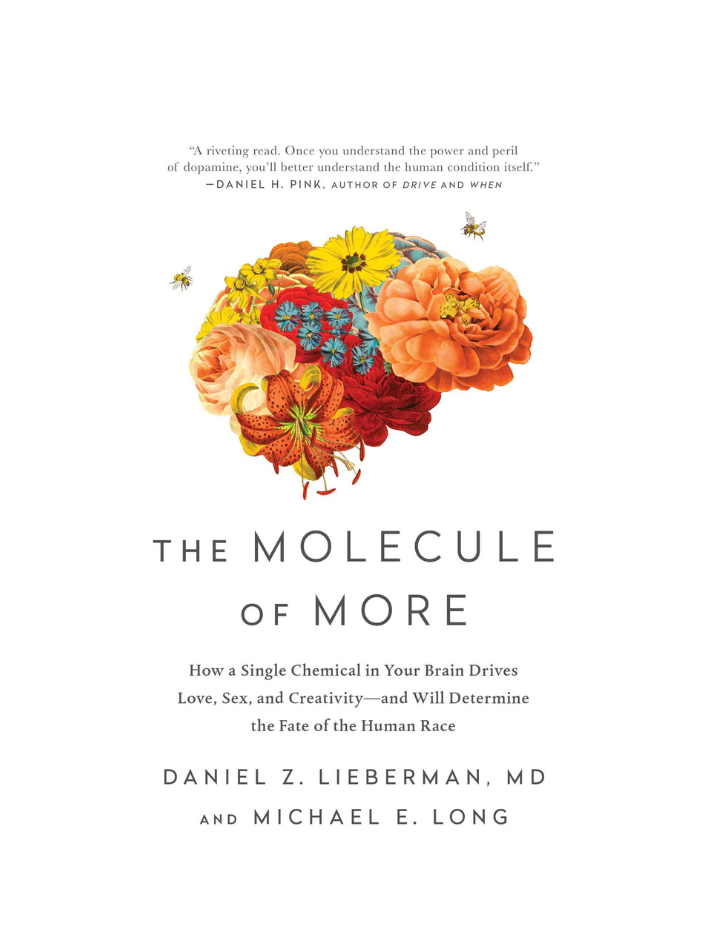
And this is where another fundamental element comes into play: desire. Daniel Z. Lieberman, in his book Dopamine: The Molecule of More, describes how dopamine is the driving force behind human ambition. It is not activated by reaching a goal, but by anticipating a new milestone. It is the same impulse that pushes us to seek, to imagine the future, and to build what does not yet exist. If dopamine fuels desire, joy is the energy that allows it to be sustained over time. And the world of work is no exception.
In environments where people see no prospects and the only focus is immediate results, motivation fades. But when an organization nurtures a forward-looking tension, when successes are recognized, and each person feels they can contribute to something bigger, the system lights up. The energy is no longer just individual; it becomes contagious. And thus joy stops being a disappointed expectation and becomes a daily reality, capable of transforming work into an experience worth living.
There are leaders who are rewriting the very concept of success, replacing the obsession with immediate results with a culture based on human connection. Creating an environment where joy can emerge is not just a matter of well-being, but a strategic factor for growth and innovation. It’s not about adding playful moments or easing work pressure, but about building organizations where harmony, impact, and recognition are part of the system, not exceptions. Where people feel seen, valued, and engaged in the larger game they are participating in.

Often it is our own mindset that keeps us away from joy. We move toward ideals of perfect happiness, built on expectations that rarely match reality. And when they are not met, they leave behind a sense of frustration and lack. But what if we tried to change our perspective? What if we stopped treating happiness as a goal to be reached and started considering joy as a daily practice?
Joy is not a destination; it is a presence that is cultivated every day — in the way we approach the journey, in the meaning we choose to give to our actions, in the connections we nurture along the way. It is not about loving every single moment. It is about loving the direction in which we are going.
Because joy, in work as in life, is not a luxury. It is a powerful spark that changes the rules of the game.