


Don’t think you are, know you are.
The Matrix Wachowskis
Researchers have observed some humpback whales saving seals and sunfish from orca attacks. Even though there is no clear benefit in doing so, the humpbacks keep defending other marine creatures that are different from them. It is an altruistic behavior that amazes scientists, and us too.
Often considered an isolated act linked to a particularly inspired moment, generosity reaches its full meaning when it becomes an approach we can apply in different areas of our lives, both personal and professional.
The beautiful thing about it is that it is a universal language. We can recognize generosity even without words, or with the words of any language. Plus, it is a renewable energy. It grows every time we share it.
Adam Grant, an American university professor, published Give and Take in 2014, an essay in which he included generosity among the qualities a leader should have, meaning the art of relating to others in an altruistic way. According to the author, there is one ingredient, often overlooked, that “deeply influences high-quality performance: how we approach interactions with other people. Every time we interact with someone at work, we have a choice. Do we try to get back the highest possible value, or do we put our value into the mix without worrying about what we receive in return?”

With Wyde, we create learning experiences that change the way people relate to themselves and to others, and generosity is a tool through which all of this can happen. How? We have tried to apply generosity within the four main areas that correspond to the impact we want to create:
You
Your Team
Your Business
Your Culture
Following this thread, we could embark on our own personal journey.
YOU: Understanding Our Own Vulnerabilities
We are used to judging ourselves, condemning our failures, and feeling inadequate, especially in the workplace where performance is always in the spotlight. Being in a competitive environment forces us to hide our imperfections and vulnerabilities.
Self-kindness is a gentle, generous, and welcoming response to our pain, regrets, and difficulties. It means offering ourselves understanding instead of self-criticism. In this context, suffering becomes an opportunity: an opportunity to experience generosity and love toward ourselves. It is about observing thoughts and emotions in the present moment without judging them and without identifying with them.
It involves recognizing our limits, giving ourselves permission to make mistakes, and taking the time needed to understand ourselves, pause, and recharge.
It is not self-indulgence, but acceptance of our imperfections and vulnerabilities. By practicing it, we reduce self-criticism, limit moments of stress and anxiety, and lay the foundation for more authentic relationships.

Your Team: Putting Yourself in Others’ Shoes
There are many different types of generosity and many ways to be generous with your team. Being generous with your time, energy, and resources is one of the most effective ways to show attention and care to those around us. It demonstrates that we are willing to get to know others, connect with them on a deeper level, and support them in their efforts. In this way, generosity helps create meaningful dialogue and build deep communication between individuals.
In the context of leadership, generosity means a spirit of openness and sharing: “When leaders give of themselves, others feel it. Generosity is generative. The more you give, the more others are willing to give in return.”
Generosity is a power that grows through sharing. The ability to put yourself in the shoes of team members is crucial for building a collaborative and supportive work environment. This attitude involves active listening, practicing empathy, and offering support when needed. Generosity fosters sincere and respectful communication among team members. It reminds us that we are all imperfect human beings and that everyone makes mistakes. This creates an environment where everyone feels free to share their opinions and concerns. Generosity works like this: it creates a ripple effect in which recognition, gratitude, and growth allow us to appreciate the contributions of colleagues.
YOUR BUSINESS: Caring for People
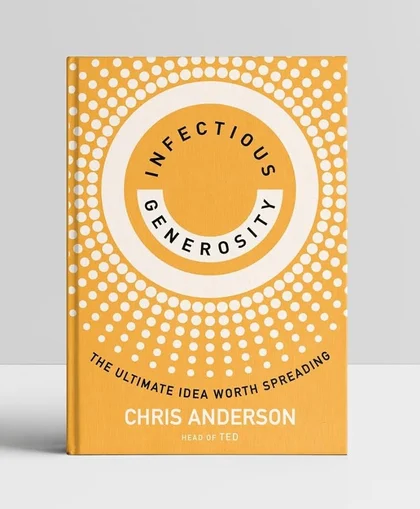
At the beginning of 2024, a very interesting book by Chris Anderson was released—Anderson is the entrepreneur behind TED Talks and an author who has helped launch over 100 magazines—Infectious Generosity.
“We live in an age of monetized anger,” writes Anderson, “and if we do not change course soon, the disease will be terminal.”
Anderson offers an extraordinarily simple remedy: think less about business and more about basic, genuine generosity. As the head of the TED organization, Anderson brought this project to life in the best possible way, sharing interesting and useful ideas freely with millions of people.
In this book, Anderson examines how social media have become a labyrinth of algorithms designed to glue people to their screens, creating a haze of simmering resentment, where people are unwilling even to speak with strangers, let alone help them. Yet, signs of change do exist, and Anderson shares stories of people acting with generosity: the hairdresser who began offering free haircuts to the homeless, or anonymous donors who distributed substantial grants to support worthy causes.
Video recordings of these and many similar episodes have been shared online; in many cases, viewers were inspired to become generous themselves, volunteering or donating to a deserving organization. Anderson sees in this pattern proof that social media can be a positive force and that many people want to be generous. He cites research showing that those who perform acts of generosity in the real world are happier than egocentric people who live online. “Our collective future depends in large part on most people giving more to the world than they take,” writes Anderson, continuing: “Generosity is a key ingredient for a happy life.”
YOUR CULTURE: Acting Without Expecting Anything in Return
Performing actions that benefit others without expecting an immediate return: this type of generosity creates value not only for the individual but for the entire community.
During the Islamophobic attacks in Christchurch, Jacinda Ardern, the Prime Minister of New Zealand, demonstrated a strong sense of empathy and solidarity toward the victims and their families, wearing a hijab as a sign of respect for the Muslim community and promoting a message of national unity and tolerance.
Among other things, she implemented progressive and inclusive policies, promoting diversity and inclusion in New Zealand society and supporting initiatives for social welfare and economic justice. Her empathetic and inclusive leadership style earned her respect and admiration both nationally and internationally.
One of the most important projects we carried out last year was with the Amplifon Foundation, an organization aimed at promoting social inclusion and preventing prejudice and loneliness from causing emotional and social harm, with a particular focus on the elderly. Collaborating with them on a project for older adults, with their life experience and vulnerabilities, allowed the Wyde team involved to connect with a world rooted in generosity and to enrich the entire community with new perspectives and values.

A Transformative Force
Every act of generosity matters and has the power to transform our work environment by improving the quality of our relationships.
How can you integrate generosity into your daily activities? Through small acts of self-care, actively listening to your colleagues, or turning your attention and efforts toward your organization or community. You may be surprised at how things are already beginning to change.